


There is a word in Ewe that I want you to handle carefully.
Dzimakpla. Pronounced [Jee-Mah-Kplah].
It literally translates; birthed but untrained. And if someone ever says it to you within an Ewe community, understand that they have not merely criticized you. They have issued an indictment against everyone who ever loved you.
That is the weight of its effect.
Ewe people hold the raising of a child as one of the most serious responsibilities a human being can carry. Not a suggestion, not an aspiration but a duty. The belief that a good name is better than gold is not a proverb people recite politely here, it is a lived standard. Ewe people are sticklers for order, conduct and doing things the right way. They do not take shortcuts easily, likewise the formation of character lightly.
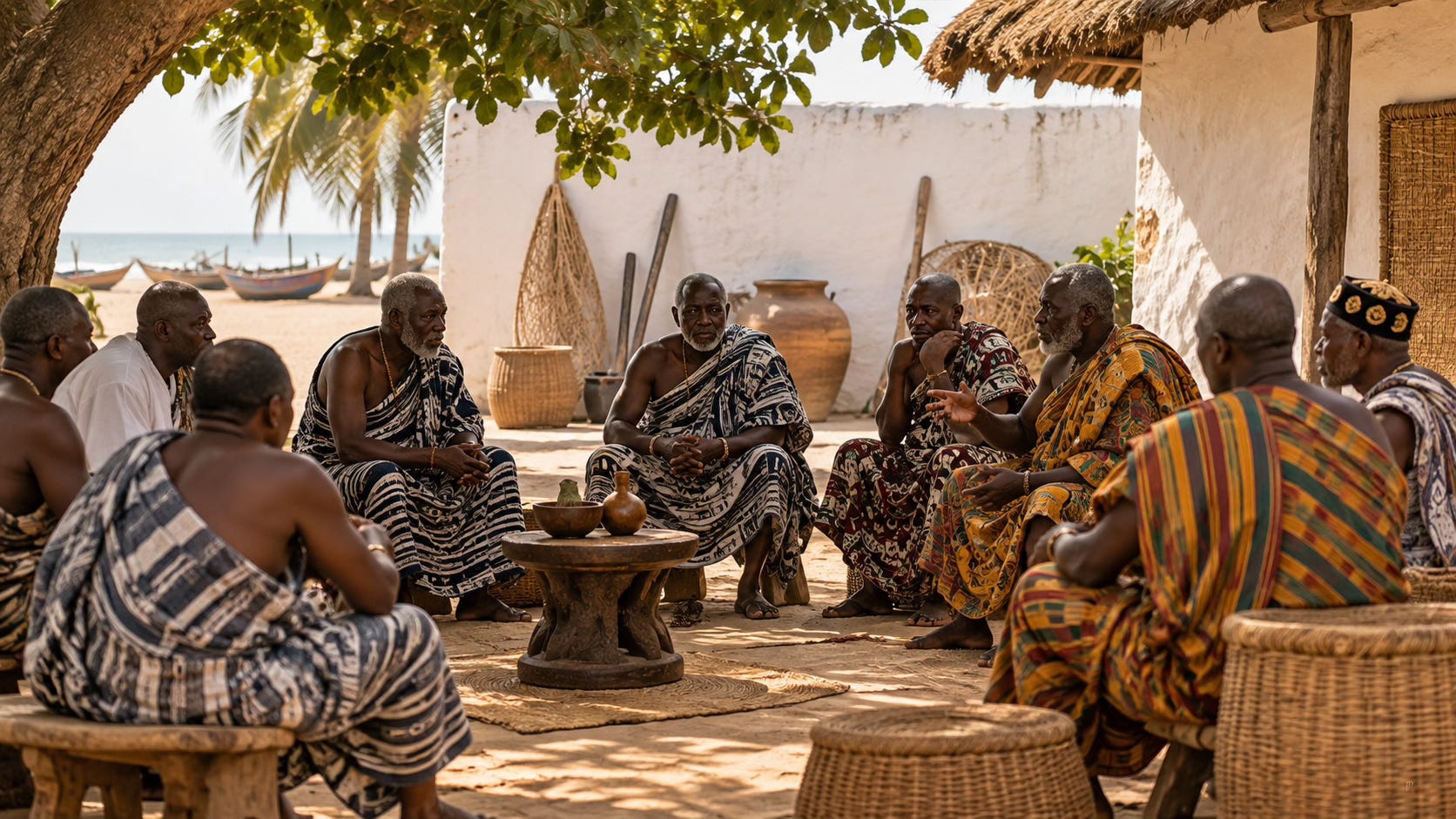
So when you are called Dzimakpla, it does not stop at your doorstep. It travels. It reaches your parents first, then your family name, then your neighbors, then every adult who ever watched you grow up and said nothing, did nothing, corrected nothing. Because in Ewe culture, the village is not a metaphor. The village is literally responsible for the child. Every elder who saw you misbehave and looked away carries a small portion of your Dzimakpla. The insult is communal because the obligation was communal.
This is why in the Ewe world, the first question asked when someone does wrong is never simply “What did they do?” It is; “Whose child is this? Which family does this person belong to?” Your conduct is not your private matter. Your name is borrowed from your kinsmen and you are expected to return it intact.
Ewe parents understood this deeply. They thrive in professions that lean heavily on rules and structure including law, civil service, teaching, law enforcement and trade. The same orderliness they practiced in their work, they brought home. Discipline was not cruelty. It was love with the long view.
And what does that upbringing produce in practice? A person who knows how to enter a room. When you show up to another person’s house as a visitor, an Amedzro, there are norms you are expected to follow. You greet. You show respect to the elders. When you are in the company of elders, you defer and allow them to speak first, unless you are specifically invited to lead. You follow the pecking order. There is an adage among us: with old age comes wisdom. Elders hold a revered place in our lives, and a well-trained person does not need to be reminded of that. You observe the house rules, and when in doubt, you ask or you remain mindful that you are not in your own space. If you find yourself in a town where your relatives reside, you go and announce your presence. Woe unto you if you are later discovered to have been in town for days without going to greet them.
This is what Dzimakpla fails to produce. Not just a rude person but a person who never learned how to be in the world with others.
But here is where the Ewe tradition reveals something surprisingly honest about itself.
Even within this culture of rigorous upbringing, there is a proverb that quietly acknowledges the limit of what any parent or village can do. It goes like this: “Ɛvi yikɛ do ɛtada ɛye wonya dzi na,” pronounced [Eh-Vee yee keh dough eh-tah da air yay wonya jeena] directly translating to the baby that shows its head is the one that is able to be birthed.
Think about that slowly.
You can only deliver the baby that is willing to come. A child who will not be shaped cannot be shaped, no matter how much love or discipline surrounds them. The village can build the container. Only the child can choose to be held by it. In the end, the willingness to be trained is itself a form of character, perhaps the most essential one of all.
And if a child is trained and still refuses to respond? The family has a word for that too, “Kplamasɛ” Trained but refused to receive the training. Evidently, the Ewe language leaves very little unnamed. Even that specific failure, the child who was given everything and absorbed nothing, has been named and accounted for.
Dzimakpla is a word about failure. However, the proverb, “Ɛvi yikɛ do ɛtada ɛye wonya dzi na,” tucked at the end of it, quietly inspires hope.
So here is my question for you. In your culture, how does the community hold the responsibility of raising a child? Is it the family alone or does it extend further? And is there a word, a proverb, a gesture, that captures what happens when that responsibility is not honored?
I would genuinely like to know.
Two weeks from now, a word for when you leave but never really go. Subscribe so it finds you.
Yao