


I want to share with you a word that stopped me mid-conversation.
It was one gorgeous spring afternoon while running grocery errands after Mass. I got into a conversation with a stranger who commented on my traditional outfit. He disclosed his observation of how warm and welcoming Ghanaians are, how people from West Africa, Ghanaians and Nigerians especially, have a particular kind of warmth you feel the moment you meet them. I nodded because I knew it was true. But even as I agreed, something was forming in the back of my mind. A connection I had not quite made before.
In Ewe, my mother tongue, pronounced like ɛwɛ, with a breath where the “w” should be, the word for visitor is Amedzro, pronounced [Ah-Meh-Jro]. Amedzro does not just mean a person who has come. It means the person I crave. The person I have been wanting.
Think about what that means for a moment. I will come back to it.
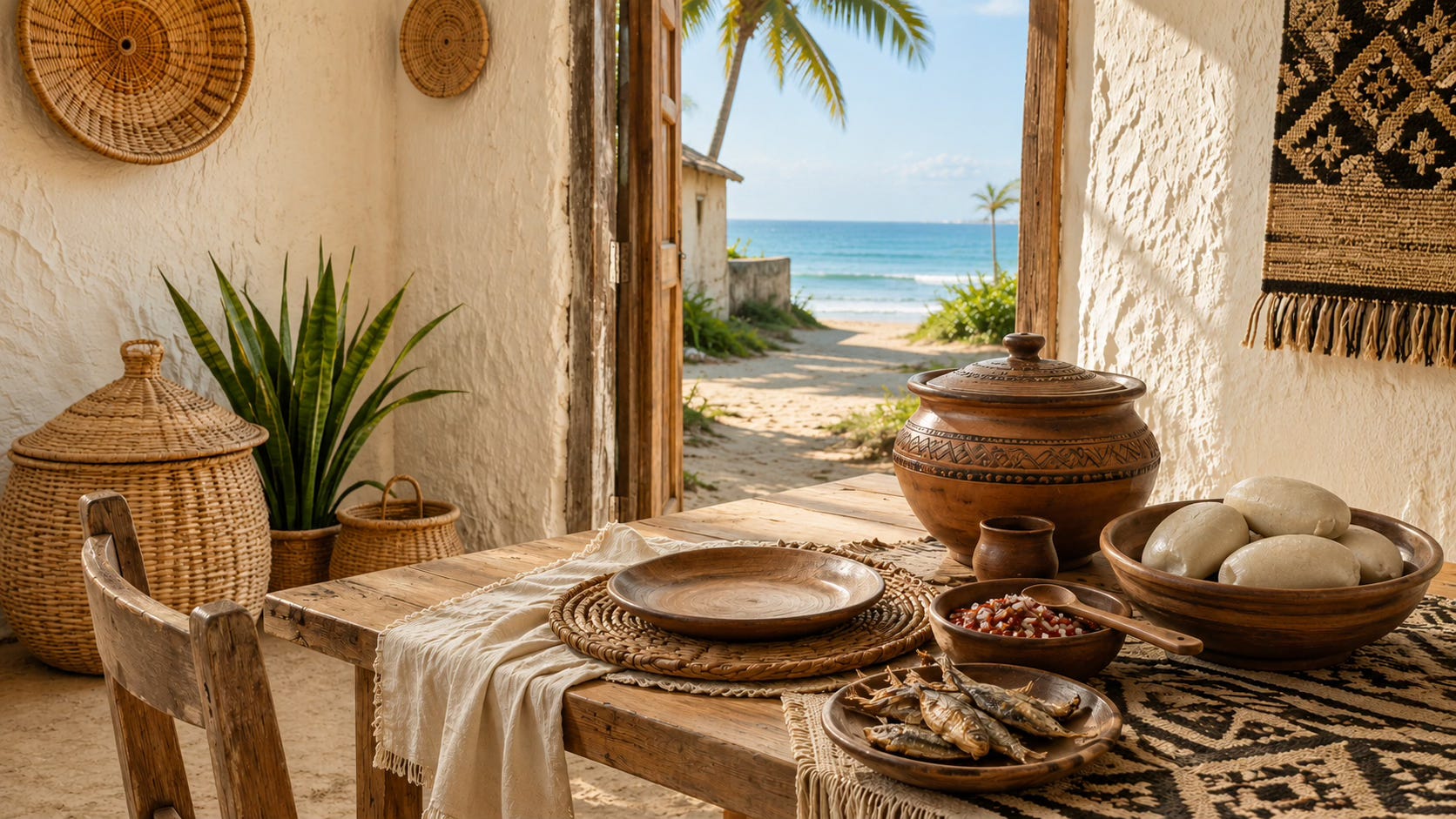
My mother cooked for people who had not arrived yet. That was just how it was. The pot was always a little fuller than necessary, an unnamed portion saved for whoever might knock after dark, whoever might show up tired and hungry without prior notice. There were no phone calls then to announce yourself. You simply came, and the welcome was already prepared. “Cook enough for our Amedzro,” she would say. For our visitor. For the person we were craving, even before we knew who they were.
If no one showed up, the following morning we warmed the food and ate it. If the food were our staple Akplɛ, we call it ɛtso kplɛ, meaning the Akplɛ from yesterday. For whatever reason ɛtso kplɛ with leftover soup from the previous day hits your taste buds differently. Nothing goes to waste.
That memory. That word. They tell me everything I need to know about why Ghanaians are who they are to the world.
This hospitality that visitors always remark on, it did not come from nowhere. It was not luck or personality. It was architecture. Our ancestors built it into the language, which built it into the kitchen, which built it into us and it thrived in our subconscious. By the time we grew up and met the world, we were already living out a philosophy we might not have been able to name.
The name is Amedzro. And now you know it.
What is your mother tongue? How does your language greet the stranger at the door, and what does that greeting ask of you?
You arrived here for a reason.
If this word opened something in you, there is more where it came from. Two weeks from now I will bring you another word from my mother tongue, and another piece of the world it carries. Subscribe if you have not already, so it finds you when it arrives.
Ɛmɛgbɛ.
Yao
I love this so much! 🔥
Honestly, Ghana to the world 🇬🇭
Can’t wait for the next post!